Problem 01
The search was fragmented, repetitive, and unclear.
Job searching often involves fragmented information, repetitive application tasks, and uncertainty about which opportunities deserve a candidate’s time and attention.
Solution 01
One workspace from discovery to the next step.
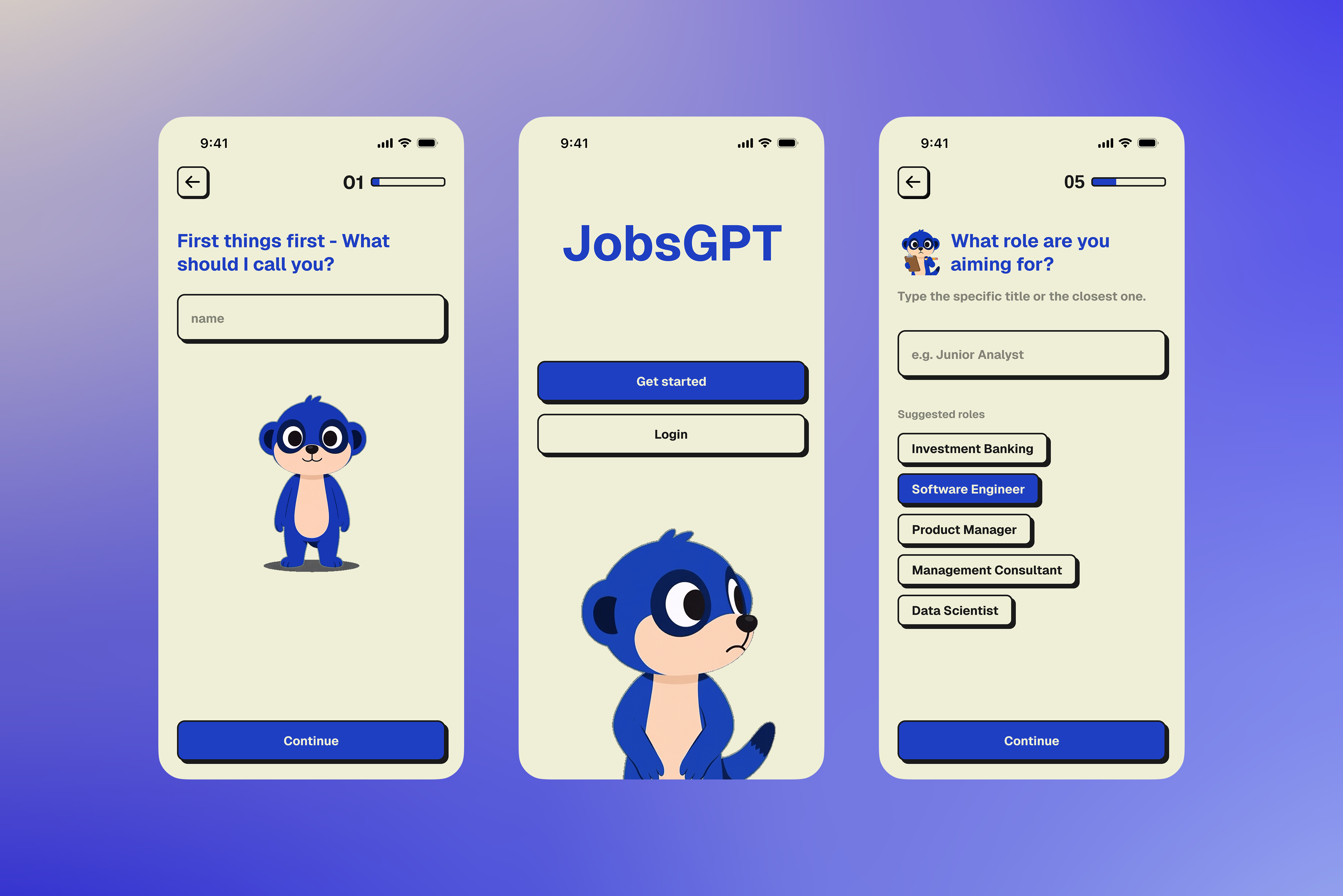
I designed a central workspace that brings job discovery, opportunity evaluation, application preparation, and progress tracking into one structured workflow. Clear hierarchy, status visibility, and task-focused screens help users understand what to do next without losing sight of their wider search.
Problem 02
AI support felt generic when users could not steer it.
AI-generated application support can feel generic or unreliable when users cannot review, refine, or control the information being produced.
Solution 02
Treat AI as a drafting partner, not a replacement.
I designed AI-assisted flows that keep the user in control: users provide relevant context, review generated suggestions, make their own edits, and prepare it for use within their application. The interface treats AI as a collaborative drafting tool rather than an unexplained replacement for user judgement.
Reflection
Assistance should stay useful without taking ownership.
JobsGPT developed my understanding of AI product design in a high-stakes setting. It highlighted the importance of transparency, tailored advice, and designing workflows that make assistance feel useful without taking ownership away from the user.